

Substation Transformer Guide: Design, Power Classes, and Grid Applications
Explore substation transformers, power-class definitions, voltage ranges, and key design features used in transmission and distribution substations.
Parts
Substation transformers are one of the most critical components in the electrical grid. They enable electricity to move from generation sources to transmission networks and ultimately into distribution systems that serve homes, businesses, and industry.
To understand substation transformers, you need to know the grid. At a high level, the power grid has three main parts:
- Generation: making electricity
- Transmission: moving electricity over long distances
- Distribution: getting usable power to customers
Something generates power, the power travels, it gets delivered.
Substations (and substation transformers) show up in multiple places in this process.
%20(1).jpg)
Power Generation: Making Electricity
Power is generated by sources ranging from hydroelectric dams and coal or nuclear plants to wind or solar farms. Once electricity is generated, it rarely stays near the source. Power plants are often located far from cities and industrial centers, which means electricity must travel long distances.
That’s where substations come in.
Transmission: Moving Power Across Long Distances
Electric power doesn’t travel efficiently at low voltage over long distances. Losses add up quickly. To make the long run from the power plant to population centers, voltage is stepped up to high levels after generation. This boosting of power to travel long distances is what we call transmission.
This voltage increase is performed by transformers at transmission substation yards.
What are transmission substations?
Transmission substations are the large, fenced-in yards filled with electrical equipment. They contain:
- Substation transformers
- Circuit breakers and switches
- Protective relays
- Control and monitoring equipment
The job of a transmission substation is simple: drive power to the user. To do that, you need transformers. Transformers give electric power a boost up or down by changing the voltage. One substation transformer steps voltage up from the power station to send it across the power lines. A second substation steps voltage back down at the destination.
Substation yards vary in size and shape. Some house a single transformer. Others have several, along with other equipment. But the transformer is always at the center of the operation.
Distribution: Delivering Power to End Users
Substation yards don’t deliver power directly to homes or stores. They get power to the general area where it's needed, somewhere closer to cities and towns. They feed power to distribution lines running to smaller transformers like polemounts or padmounts. Those are the transformers you see around your neighborhood. This is the part of the grid that delivers power to your doorstep. This process is called distribution.
To sum up, power is harnessed, sent, and delivered for use. And none of this would happen without substations and substation transformers.
Substations vs. Substation Transformers
The term substation is often used in two ways:
- To describe the entire substation yard and its equipment
- Transformer manufacturers may use the term to describe specifically the substation transformer itself

Over time, the transformers used in substation yards developed into their own category. These substation transformers share a common design due to their role in the grid. Those features are what define them.
What is a substation transformer?
A substation transformer is an electrical transformer with a robust design. These units are scalable for large electrical loads, and they're typically installed inside fenced‑in yards due to their live external components and higher operating voltages.
Their defining features usually include:
- External bushings
- Radiator‑mounted cooling systems
- Visible gauges and protection devices
- Robust tanks and winding designs
Let’s look at these in more detail.

Bushings
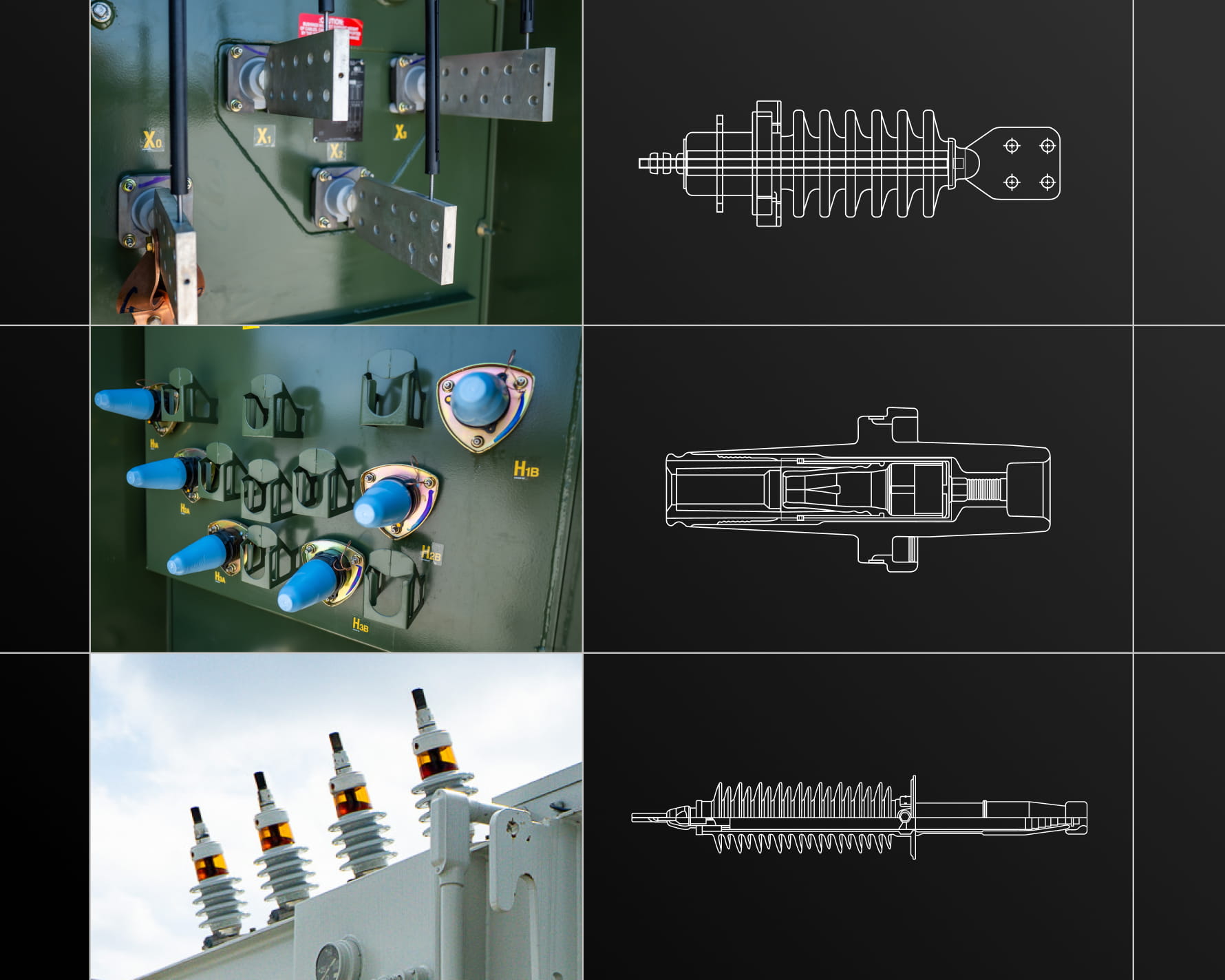
Substation transformers often use exposed bushings mounted on the side or top of the tank. Side‑mounted designs may use flanges, throats, or ATCs. Higher voltage applications will require top-mounted bushings to provide needed electrical clearances.
Condenser Style Bushings
At these higher voltages, typically 69 kV and above, bushings become larger and more complex. Condenser style bushings are common at these levels. Because of their size, the bushings are often shipped separately from the unit. They're then installed in the field with testing before and after installation.
.jpg)
Solid Style Bushings
Smaller substations, generally below 35 kV, often use solid bushings. Due to the lower voltages and smaller air clearance requirements, side-mounted designs are common with ATCs or a throat.
Learn more about condenser and solid-style bushings.
Auxiliary Cooling Systems
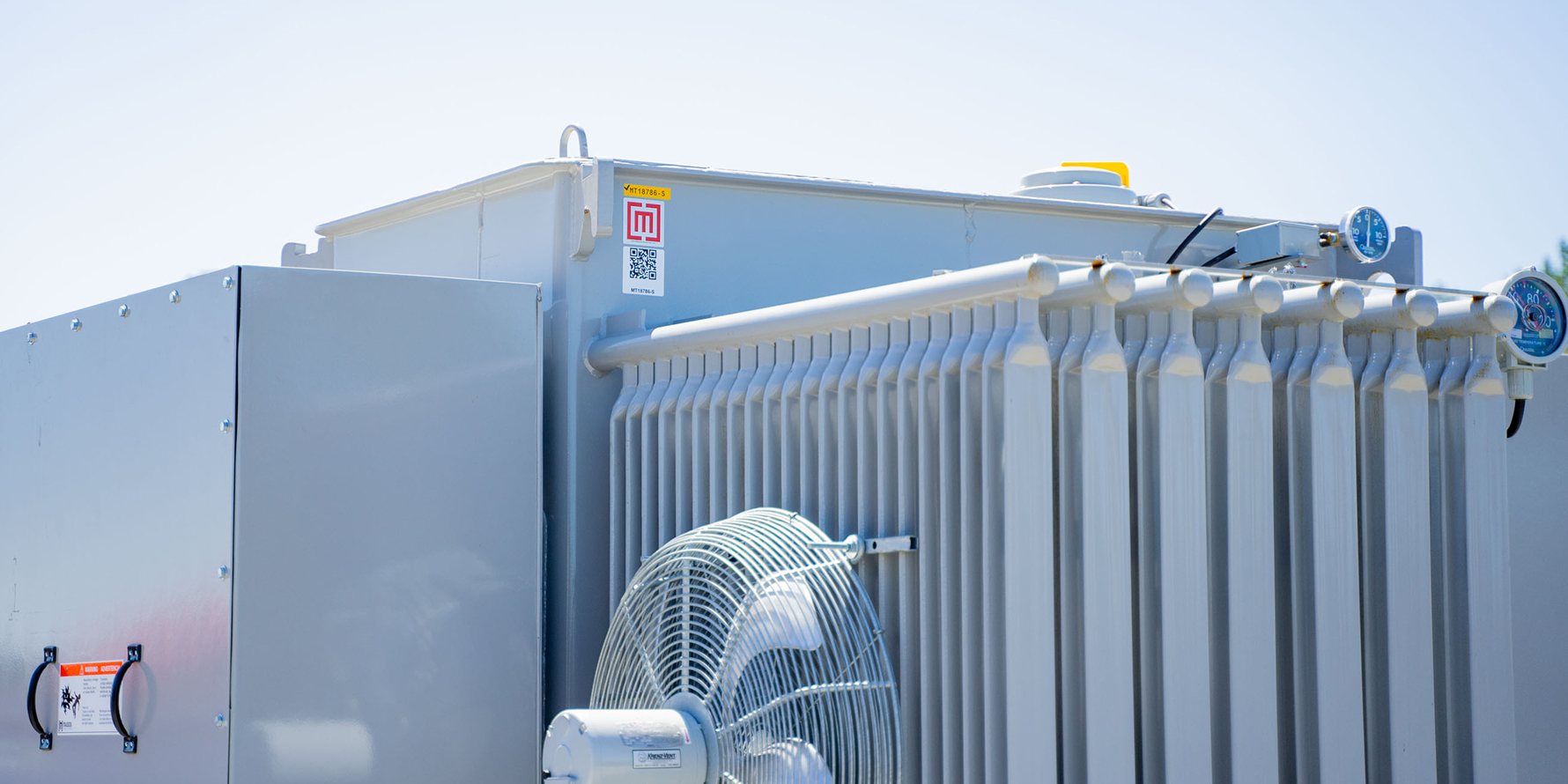
Converting large amounts of power generates heat. To manage that heat, substation transformers use auxiliary cooling systems. Most often radiators with external fans.
Fan ratings are listed on the nameplate using designations like ONAF or KNAF. These ratings show both the base kVA (without fans) and the increased kVA available when fans are operating. You’ll typically see this written as a split rating, such as 2500/3125.

Larger substations may use multiple cooling stages, each with its own set of fans and alarms. If temperatures continue to rise, additional stages engage automatically.
Very large transmission units may also use internal oil pumps to circulate oil and handle heat. But, this is usually only on very large transformers.
Monitoring and Protection
Because substation transformers serve such a critical role in the grid, protection is essential. Substation transformers are equipped with monitoring and protective devices such as:
- Winding temperature indicators
- Sudden pressure relays with alarm and trip functions
- Pressure relief devices
- Gauges with alarm contacts for remote monitoring
.jpg)
These systems help detect problems early and protect both the transformer and the grid.
Tank and Windings
The tank design for substation transformers is built more robust than other types of transformers. Thicker steel and stronger bracing are needed to withstand fault forces and long‑term service demands.
Inside the tank, substation transformers use rectangular and circular disc windings. Smaller units typically below 35 kV often use rectangular coils. While larger, higher‑capacity units are typically built with disc windings. Disc windings offer higher mechanical and electrical strength. This helps handle higher fault currents. Disc designs also use larger cooling ducts that reduce hot-spot temperatures and thermal loading.
Read more about disc vs. rectangular in our Guide to Transformer Windings & Coils article.
Transmission Substations vs. Distribution Substations
There’s a wide range of substation transformer sizes. At one end, you have massive transmission substations serving entire regions. At the other, you’ll find smaller distribution substations feeding power to individual industrial buildings.
You can have transmission units that are relatively small, and distribution units that are larger. The terms “Power Class” and “Distribution Class” are used to describe this range of substations.
What is a power class substation?
Power class is an industry term that distinguishes larger, more complex substation transformers from simpler and smaller distribution units.
At the 35 kV or the 5 MVA threshold, substation design begins to change. Winding construction, insulation systems, clearances, cooling requirements, and bushing selection all become more complex.
Once you cross that threshold, you’re no longer dealing with simple distribution equipment. You’re dealing with power‑class substation design.
How does the industry define power class?
There isn’t a single, clear definition of power class across the industry. IEEE standards refer to Class I and Class II power transformers, with Class II covering the larger designs.
For many years, IEEE C57.12.10 served as the primary standard for substation transformers of all sizes, with an emphasis on larger transmission units. As smaller substations became more common, IEEE C57.12.36 was introduced to address substation‑style transformers below 10 MVA and 69 kV.
Together, these standards help distinguish distribution‑side substations from larger transmission designs.
For buyers and procurement teams, the key takeaway is this: when you're sourcing above 5 MVA or 35 kV, you need a supplier with power-class design and testing experience. The equipment is more complex, lead times are longer, and the consequences of a specification error or quality shortfall are significant.
Choosing Maddox for Substation Transformers
Substation transformers play a critical role in the power grid. They move power from generation to end use. Without them, it would be impossible to get power where it needs to go.
Where to Procure Substations
Maddox has one of the largest inventory of liquid-filled transformers in North America. We supply and stock substation transformers ranging from 500 kVA to 100,000 kVA, designed and tested to meet IEEE standards across both distribution and power-class substation applications.
Here's what that means for your procurement process:
Deep In-Stock Inventory
We maintain thousands of transformers in stock and ready to ship. This includes substation units that would otherwise carry months-long manufacturer lead times. When schedules are tight, our inventory gives your project both new and remanufactured options that most suppliers can't offer.
Custom and Stock Capabilities
Have a specific design, footprint, or specifications for your project? Our engineering team works directly with buyers and contractors to have units built to your exact specification.
Whether you're procuring equipment for a new substation build, an emergency replacement, or a capacity expansion, Maddox has the inventory, engineering depth, and industry experience to deliver on your timeline.
Have a project in mind? Fill out the form below to discuss your substation transformer requirements.