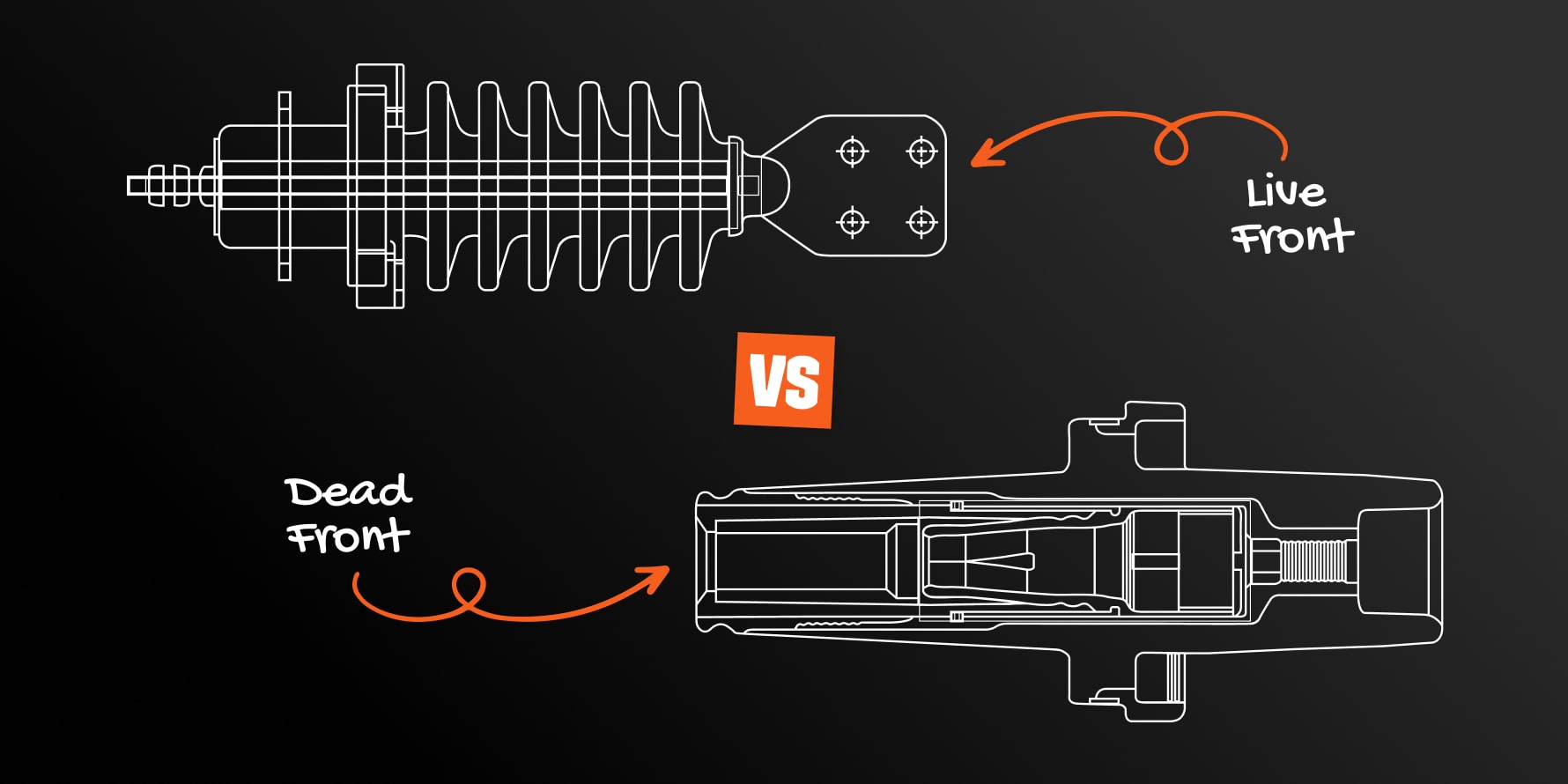
Schematics of live front and dead front bushings

The Live Front vs. Dead Front Bushing

A bushing allows a conductor to pass through the tank wall of a transformer without making electrical contact. Learn about live front and dead front bushings.

November 26, 2025

In this article, we’ll give you a quick rundown on the differences between live front bushings and dead front bushings. The main difference is straightforward. Live front bushings have exposed terminals, while dead front bushings are fully insulated. 

Before we dive in, if you need to brush up on how transformers work, check out our comprehensive guide to electrical transformers.

What is a transformer bushing?

A transformer bushing is an insulator that allows a conductor to pass safely through the tank wall of a transformer without making electrical contact with it. Electrical current enters the transformer through the bushing. That bushing is an effective, insulated path for current to travel through.

Types of Transformer Bushings

There are two main types of transformer bushings: Live front and deadfront. Each serves the same purpose but uses very different approaches to insulation, safety, and maintenance.
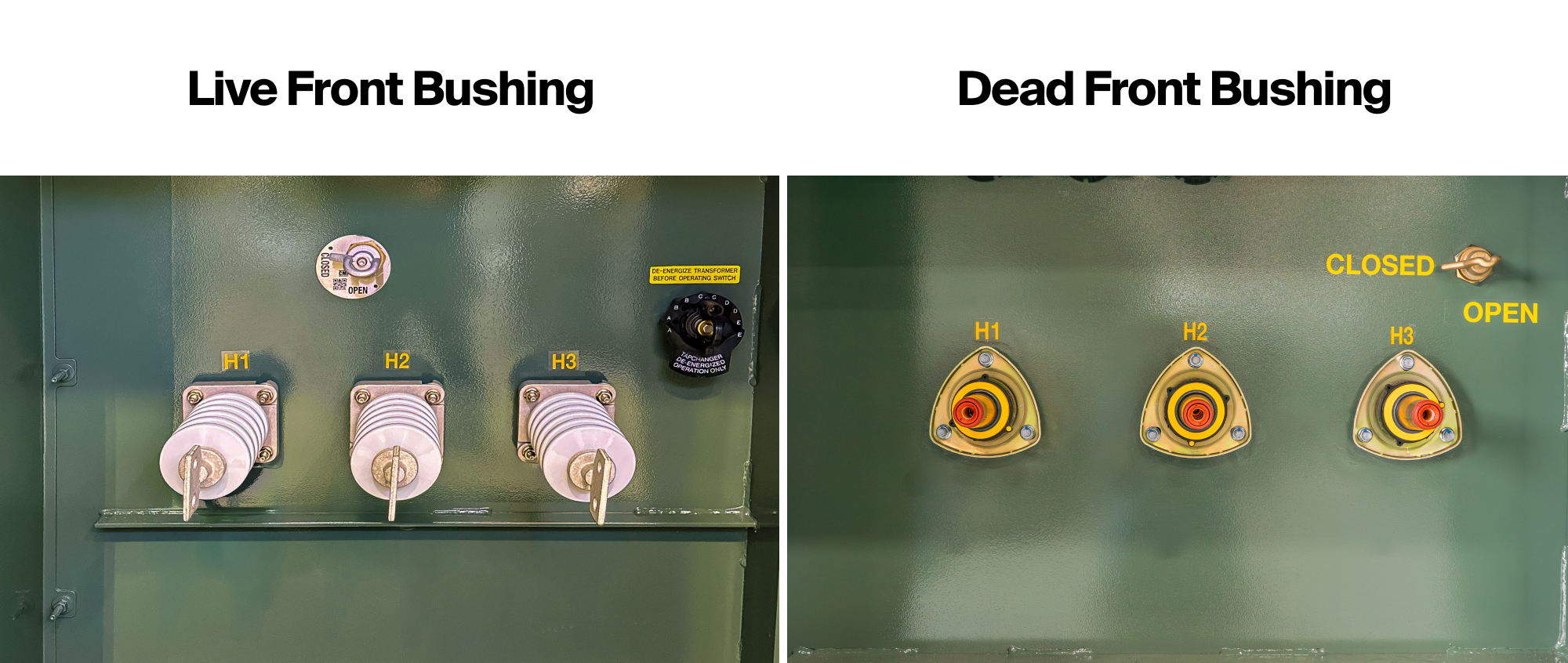
Live front vs. dead front bushings in padmount cabinet

What is a live front bushing?

A live-front bushing is one in which part of the conductor or termination is exposed (i.e. “live”). Live just refers to the fact that the terminal is exposed. There is electricity flowing through it. Touching a live front bushing could result in electrocution. As a matter of fact, you don’t want to even get too close due to arc-flash concerns.

Parts of a live front bushing

Parts of a transformer live front bushing

A live front bushing is made up of several components. Here are the main ones:

Conductor / Central Rod

The central rod is the main current-carrying element running through the center of the bushing. It’s usually made of copper or aluminum. The internal winding is connected to the external terminal via this central rod.

Spade / External Terminal

The spade is at the end of the bushing. This is where the actual termination is made. Cables or jumpers are connected to the spade with a mechanical lug or a crimp lug. 

Insulating Body & Waffles

Below the spade is the insulating body, usually made of porcelain or epoxy. The body is shaped with little ridges called waffles or sheds. These waffles help protect against something called creep. Creep is where a tiny arc travels across a surface area by “creeping” along with some small amount of water, dust, or oil. Waffles provide the necessary clearance to prevent creep by providing a larger amount of surface area.

Mounting Flange / Gasket Assembly

The mounting flange and gasket assembly secure the bushing to the transformer tank and seal the oil compartment. This prevents leaks and helps to maintain the internal pressure integrity.

Gaskets and Seals

Rubber or synthetic gaskets provide a seal between the bushing and the tank. When these seals fail, oil can leak from the tank.

Stud

Finally, there is a stud where the bushing internally connects to the transformer core and windings.

What is a dead front bushing?

Dead front bushings are fully insulated bushings that don’t have a “live” surface of the bushing exposed.

These do the exact same thing as live front bushings. The difference is that they are fully rubber-insulated. The obvious benefit is that you can open the cabinet and there is a lower risk of arc-flash.

Most padmount transformers have dead front bushings on the primary side, but live front on the secondary side.

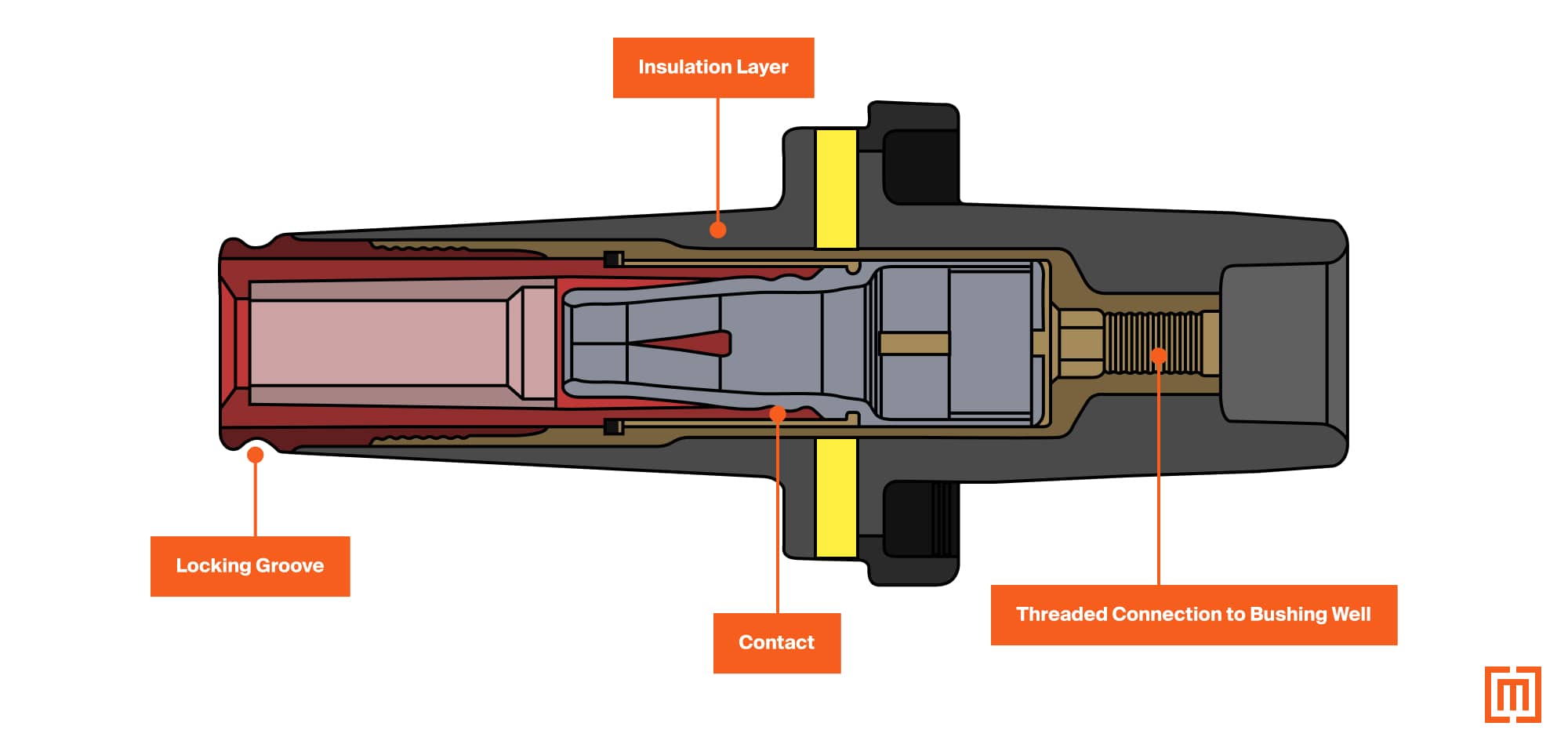
Cross section of dead front bushing

Parts of a transformer dead front bushing​

Dead front bushings have a few more parts than live front bushings. 

Load Break Elbow

For dead front bushings 200A and below, the fully rubber dead front bushing is terminated using a load break elbow. The transformer cables connect to this elbow. The dead front bushing interface has a groove at its end onto which the elbow locks, making for a secure connection. To break this connection, the utility (or other qualified personnel) uses a hot stick to pull the elbow off the bushing insert.
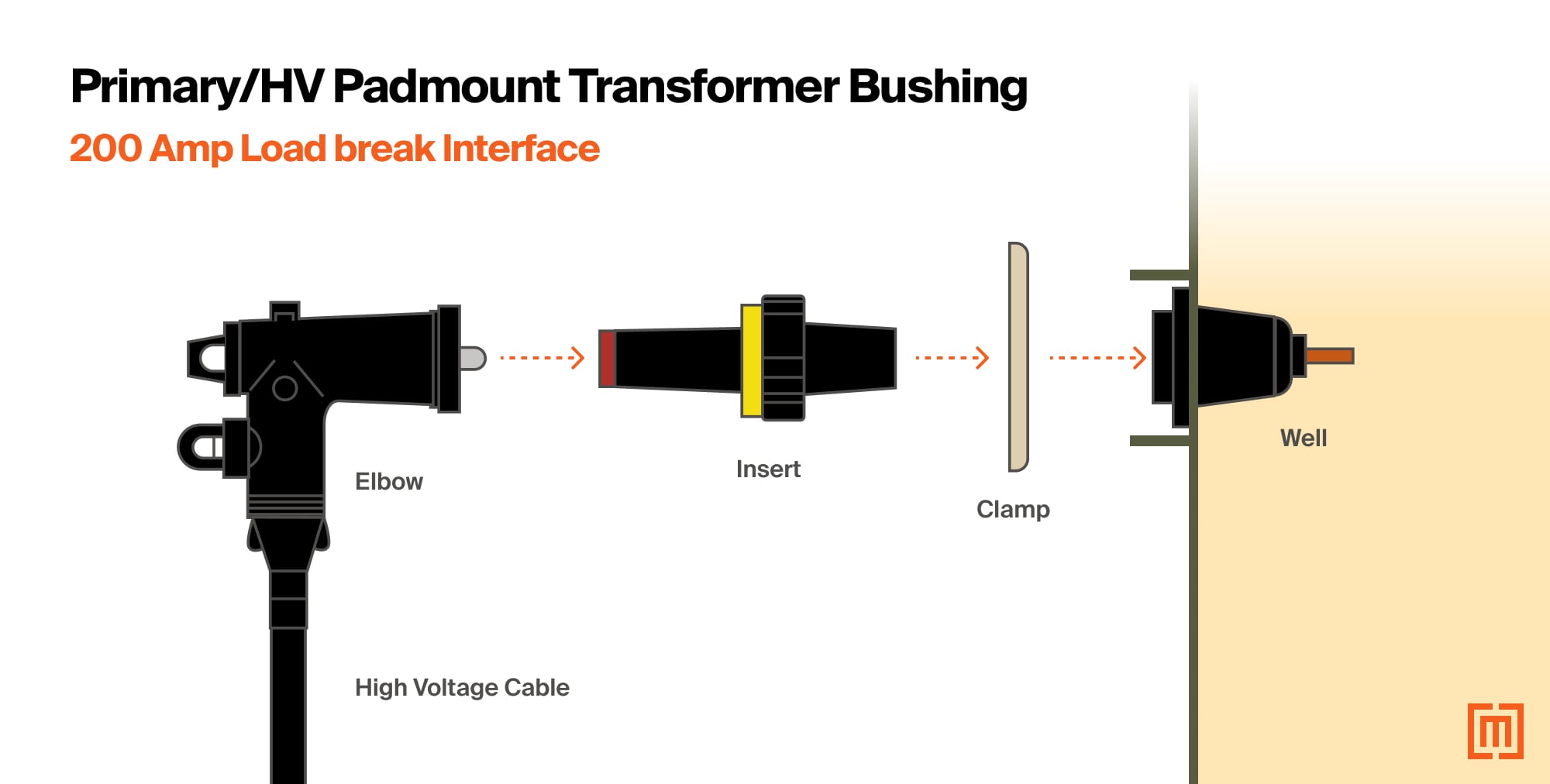
200A Load Break Bushing Interface
Dead Break Elbow

Above 200A, dead front bushings must be switched off upwind of the HV cables. These are called 600A “dead break” bushings. Unlike the load break interface, the dead break does not allow the load to be broken at the bushing.

600A Dead Break Bushing Interface

For more information on Dead Break vs. Load Break bushings, see this video:

Bushing Insert

The elbow connects to the bushing insert, which is a mating surface for the elbow. The insert has a layer of fully-insulated rubber. Inside this layer is the contact, which provides a path for current to flow from the transformer to the terminal.

Dead front bushing insert

Bushing Well

For 200A bushing inserts, the insert connects to a bushing well, installed in the transformer tank wall. The bushing well mates with the bushing insert via a threaded connection point in the insert. The insert and well are combined into a single piece on 600A dead break bushings.
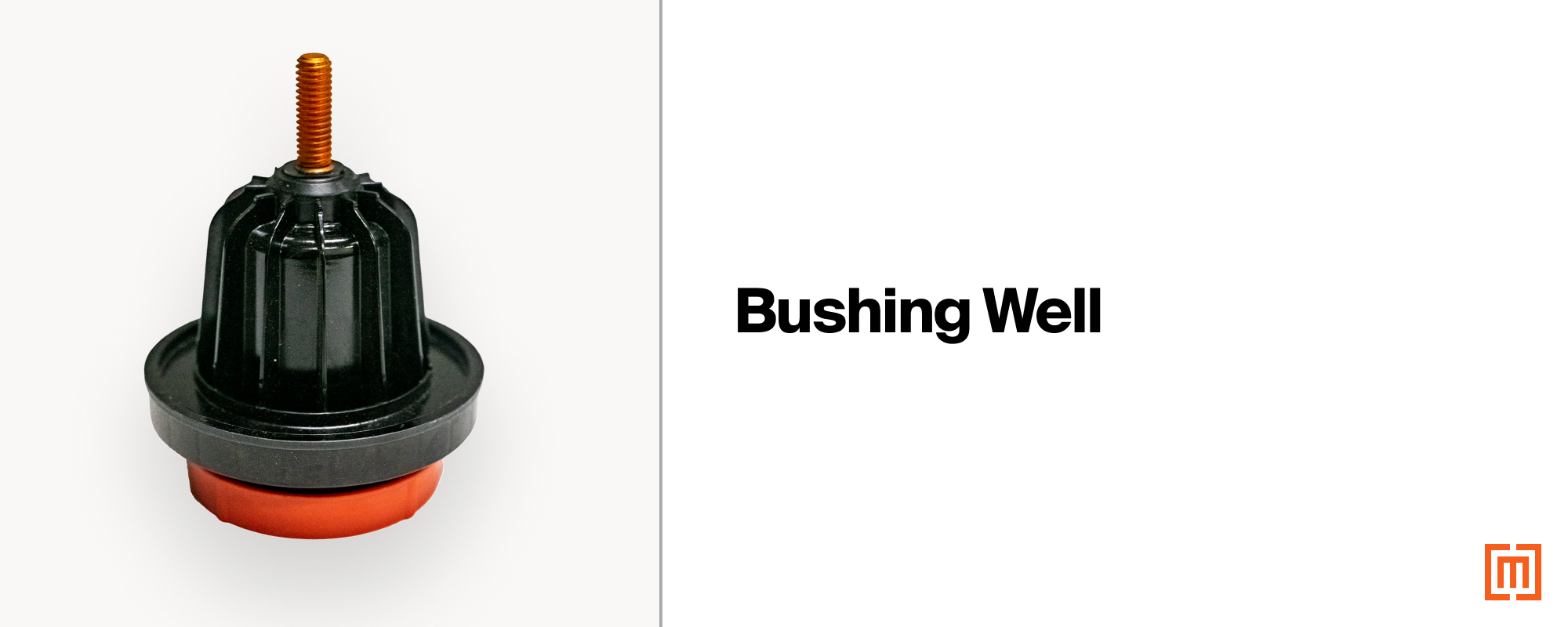
Bushing well

Live Front vs. Dead Front Bushings

Live front and dead front bushings perform the same function. However, they are generally used in particular applications.

Feature: Live Front Bushing Dead Front Bushing
Terminal Exposed & energized Fully Insulated & enclosed
Insulation Minimal external insulation Full rubber insulation
Cable Termination Terminates to mechanical/crimp lug Terminates to load break or dead break elbow
Typical Use Polemounts & Substations; LV side of padmounts HV side of padmounts
Risk High risk of electrocution & arc-flash Minimal risk when cabinet is open
Ease of Maintenance Easier visual inspection Requires specialized elbow removal tools

Dead Front Bushing Application

Due to the higher voltages on the utility side, primary/HV bushings are often the dead front type. The fully insulated dead front design limits exposure to higher voltages and reduces the risk of 

arc flash for utility workers and other qualified persons accessing the HV cabinet while the transformer is energized.

Dead front vs. live front in primary and secondary sides of cabinett

Live Front Bushing Application

Because the dead front interface typically allows only one cable connection per elbow connector, it is uncommon to see it used for transformer secondary/LV terminations (where multiple cables are landed on each phase). 

Live front bushings are also common on substations and polemounts. Live front bushings are also common on substations and polemounts. Check out this video for a rundown of the differences between live front and dead front bushings:

Conclusion

Maddox stocks thousands of transformers with whatever combination of bushings you need. If you have more questions about bushings, fill out the form below. We’ll get you the info you need!

Written by:
Mac Spiller
A Maddox Padmount transformer loaded on a truck and shipping out

Get in touch

Find out how Maddox can power on your next project.
Thank you!
Your submission has been received!
Oops! Something went wrong while submitting the form.
All Articles

The Live Front vs. Dead Front Bushing

A bushing allows a conductor to pass through the tank wall of a transformer without making electrical contact. Learn about live front and dead front bushings.

Written by:
Mac Spiller

November 26, 2025

Schematics of live front and dead front bushings

In this article, we’ll give you a quick rundown on the differences between live front bushings and dead front bushings. The main difference is straightforward. Live front bushings have exposed terminals, while dead front bushings are fully insulated. 

Before we dive in, if you need to brush up on how transformers work, check out our comprehensive guide to electrical transformers.

What is a transformer bushing?

A transformer bushing is an insulator that allows a conductor to pass safely through the tank wall of a transformer without making electrical contact with it. Electrical current enters the transformer through the bushing. That bushing is an effective, insulated path for current to travel through.

Types of Transformer Bushings

There are two main types of transformer bushings: Live front and deadfront. Each serves the same purpose but uses very different approaches to insulation, safety, and maintenance.

Live front vs. dead front bushings in padmount cabinet

What is a live front bushing?

A live-front bushing is one in which part of the conductor or termination is exposed (i.e. “live”). Live just refers to the fact that the terminal is exposed. There is electricity flowing through it. Touching a live front bushing could result in electrocution. As a matter of fact, you don’t want to even get too close due to arc-flash concerns.

Parts of a live front bushing

Parts of a transformer live front bushing

A live front bushing is made up of several components. Here are the main ones:

Conductor / Central Rod

The central rod is the main current-carrying element running through the center of the bushing. It’s usually made of copper or aluminum. The internal winding is connected to the external terminal via this central rod.

Spade / External Terminal

The spade is at the end of the bushing. This is where the actual termination is made. Cables or jumpers are connected to the spade with a mechanical lug or a crimp lug. 

Insulating Body & Waffles

Below the spade is the insulating body, usually made of porcelain or epoxy. The body is shaped with little ridges called waffles or sheds. These waffles help protect against something called creep. Creep is where a tiny arc travels across a surface area by “creeping” along with some small amount of water, dust, or oil. Waffles provide the necessary clearance to prevent creep by providing a larger amount of surface area.

Mounting Flange / Gasket Assembly

The mounting flange and gasket assembly secure the bushing to the transformer tank and seal the oil compartment. This prevents leaks and helps to maintain the internal pressure integrity.

Gaskets and Seals

Rubber or synthetic gaskets provide a seal between the bushing and the tank. When these seals fail, oil can leak from the tank.

Stud

Finally, there is a stud where the bushing internally connects to the transformer core and windings.

What is a dead front bushing?

Dead front bushings are fully insulated bushings that don’t have a “live” surface of the bushing exposed.

These do the exact same thing as live front bushings. The difference is that they are fully rubber-insulated. The obvious benefit is that you can open the cabinet and there is a lower risk of arc-flash.

Most padmount transformers have dead front bushings on the primary side, but live front on the secondary side.

Cross section of dead front bushing

Parts of a transformer dead front bushing​

Dead front bushings have a few more parts than live front bushings. 

Load Break Elbow

For dead front bushings 200A and below, the fully rubber dead front bushing is terminated using a load break elbow. The transformer cables connect to this elbow. The dead front bushing interface has a groove at its end onto which the elbow locks, making for a secure connection. To break this connection, the utility (or other qualified personnel) uses a hot stick to pull the elbow off the bushing insert.

200A Load Break Bushing Interface
Dead Break Elbow

Above 200A, dead front bushings must be switched off upwind of the HV cables. These are called 600A “dead break” bushings. Unlike the load break interface, the dead break does not allow the load to be broken at the bushing.

600A Dead Break Bushing Interface

For more information on Dead Break vs. Load Break bushings, see this video:

Bushing Insert

The elbow connects to the bushing insert, which is a mating surface for the elbow. The insert has a layer of fully-insulated rubber. Inside this layer is the contact, which provides a path for current to flow from the transformer to the terminal.

Dead front bushing insert

Bushing Well

For 200A bushing inserts, the insert connects to a bushing well, installed in the transformer tank wall. The bushing well mates with the bushing insert via a threaded connection point in the insert. The insert and well are combined into a single piece on 600A dead break bushings.

Bushing well

Live Front vs. Dead Front Bushings

Live front and dead front bushings perform the same function. However, they are generally used in particular applications.

Feature: Live Front Bushing Dead Front Bushing
Terminal Exposed & energized Fully Insulated & enclosed
Insulation Minimal external insulation Full rubber insulation
Cable Termination Terminates to mechanical/crimp lug Terminates to load break or dead break elbow
Typical Use Polemounts & Substations; LV side of padmounts HV side of padmounts
Risk High risk of electrocution & arc-flash Minimal risk when cabinet is open
Ease of Maintenance Easier visual inspection Requires specialized elbow removal tools

Dead Front Bushing Application

Due to the higher voltages on the utility side, primary/HV bushings are often the dead front type. The fully insulated dead front design limits exposure to higher voltages and reduces the risk of 

arc flash for utility workers and other qualified persons accessing the HV cabinet while the transformer is energized.

Dead front vs. live front in primary and secondary sides of cabinett

Live Front Bushing Application

Because the dead front interface typically allows only one cable connection per elbow connector, it is uncommon to see it used for transformer secondary/LV terminations (where multiple cables are landed on each phase). 

Live front bushings are also common on substations and polemounts. Live front bushings are also common on substations and polemounts. Check out this video for a rundown of the differences between live front and dead front bushings:

Conclusion

Maddox stocks thousands of transformers with whatever combination of bushings you need. If you have more questions about bushings, fill out the form below. We’ll get you the info you need!

A Maddox Padmount transformer loaded on a truck and shipping out

Get in touch

Find out how Maddox can power on your next project.
Thank you!
Your submission has been received!
Oops! Something went wrong while submitting the form.