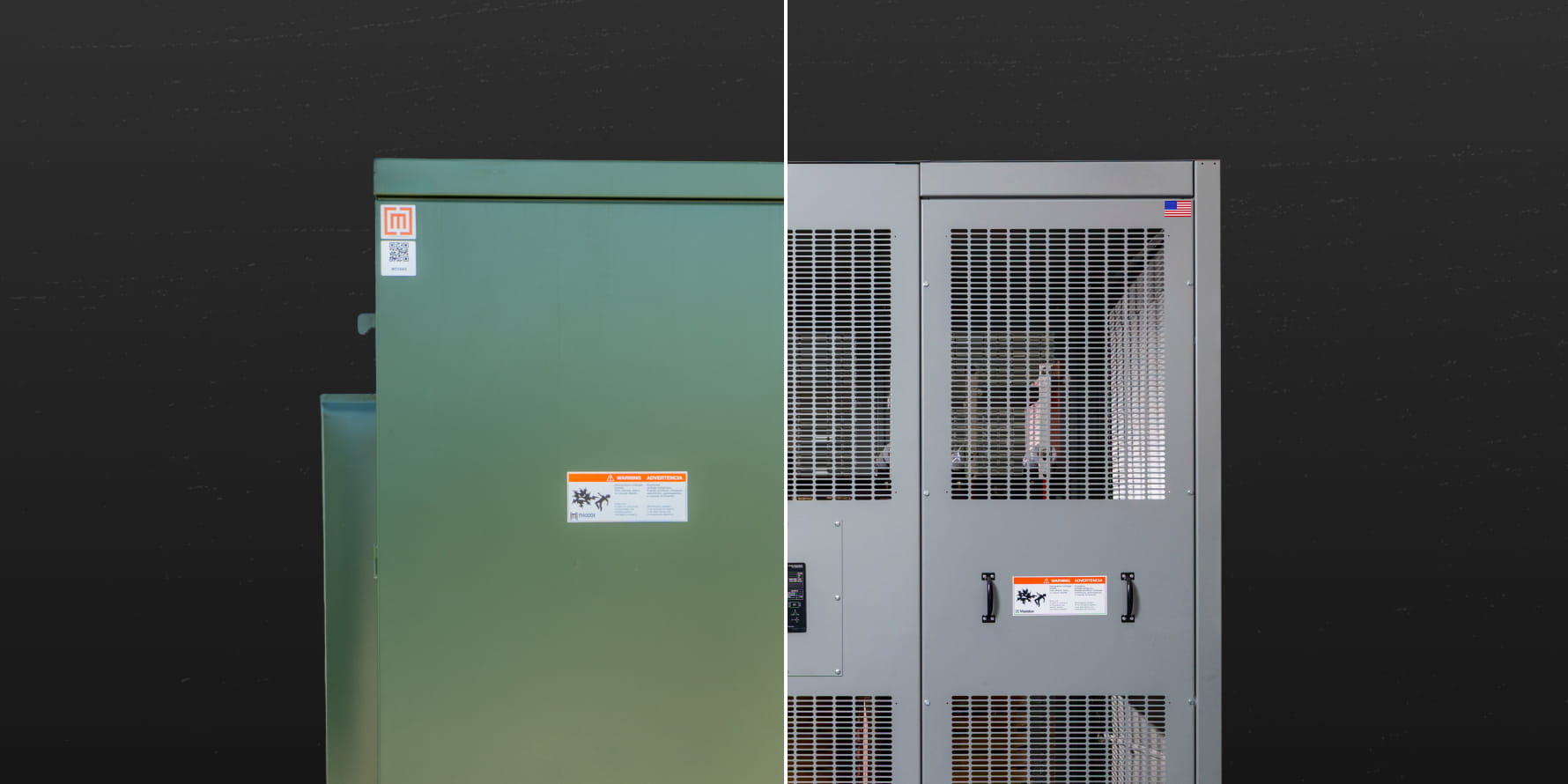


Guide to Liquid-Filled and Dry-Type Transformers
Compare liquid-filled and dry-type transformers by cost, location, maintenance, efficiency, footprint, and reliability to choose the right unit.
Parts
Liquid-filled or dry-type? Which one should you get?
Choosing the right type of transformer for your project depends on a number of factors. These include engineer preferences, project requirements, environmental concerns, and install location. We’ll examine each of these later on in this article.
Before we do that, let's first look at the two main types of transformers and how they work.
Differences Between Liquid-Filled and Dry-Type Transformers
The main difference between a liquid-filled and a dry-type transformer is their cooling system.
Liquid-filled units use a dielectric fluid, while dry-types use ambient air. But the cooling medium isn't strictly what drives the buying decision. Ultimately, whether you go dry or liquid will come down to practical factors like footprint, indoor vs. outdoor installation, and your overall budget.
Before we go over these factors, let’s get the basics of each transformer type.
What are liquid-filled transformers?
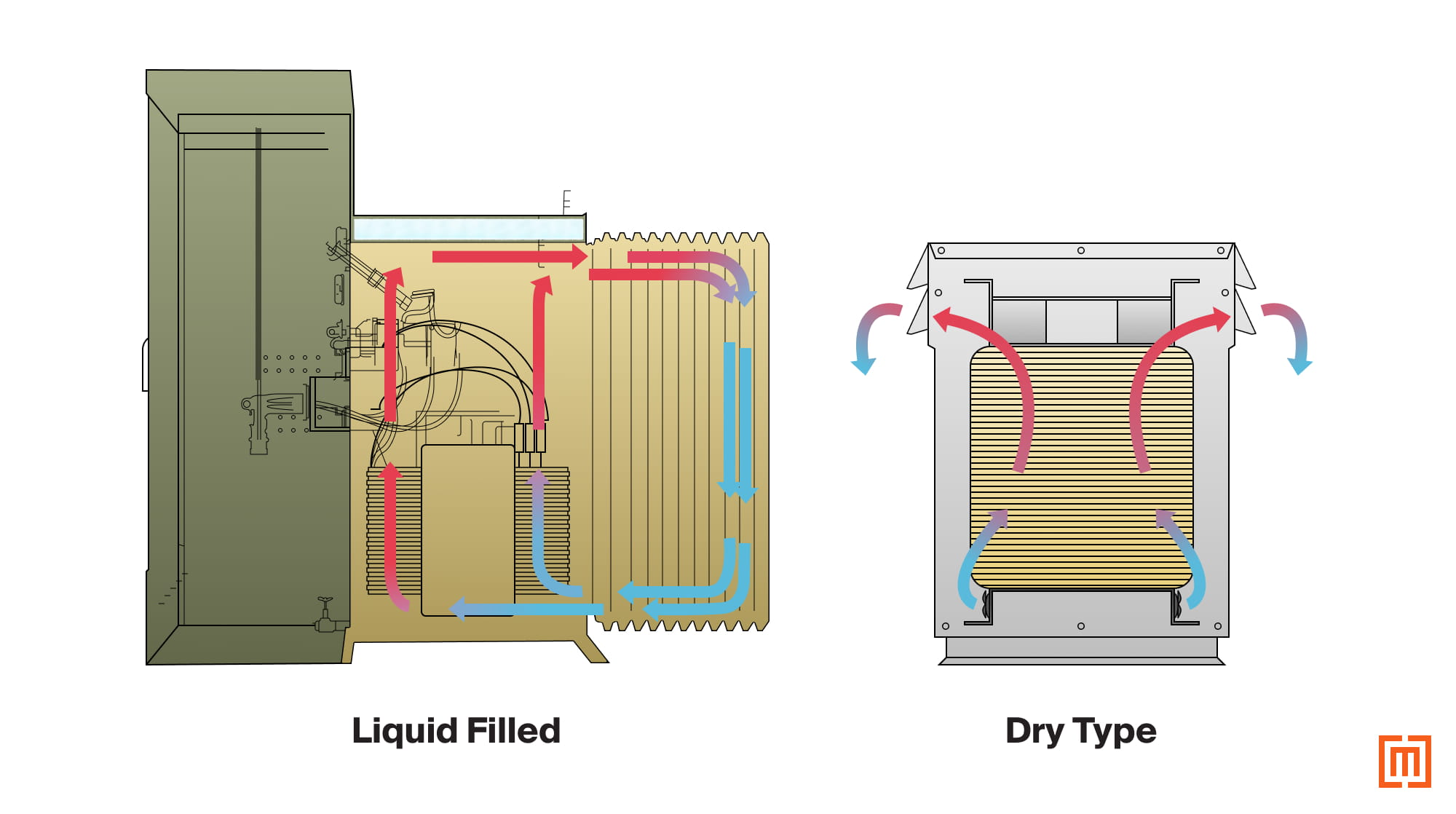
Liquid-filled transformers use dielectric fluid to cool, insulate, and lubricate their internal parts. The most common types of fluid are mineral oil, FR3® fluid, and silicone. Liquid-filled transformers are sometimes called “oil-filled transformers”, “oil-immersed transformers”, or “wet transformers”.
What does transformer fluid do?
The fluid inside a transformer serves three primary functions:
1. Cooling
Transformer oil cools the windings through natural convection. As the core and coils heat the oil, the oil rises and flows outward. This transfers the heat to cooler parts of the transformer. In larger transformers, the heat will move through radiators before dissipating into the air. As the oil cools, it circulates back toward the windings, creating a continuous cooling cycle.
2. Insulation
Inside the transformer, oil and cellulose paper work together to insulate the windings, providing the dielectric strength needed to withstand strong electric fields without breaking down. This strength is measured by the fluid’s dielectric breakdown voltage, which is designed to exceed the transformer’s operating voltage. Manufacturers verify this through routine factory tests before the transformer is put into service.
3. Lubrication
Dielectric fluid is also a lubricant to the moving parts inside the transformer. Components, such as tap changers and load break switches, are fully submerged in the oil to ensure they function smoothly. The fluid prevents the parts from locking up over time.
Types of Liquid-Filled Transformers
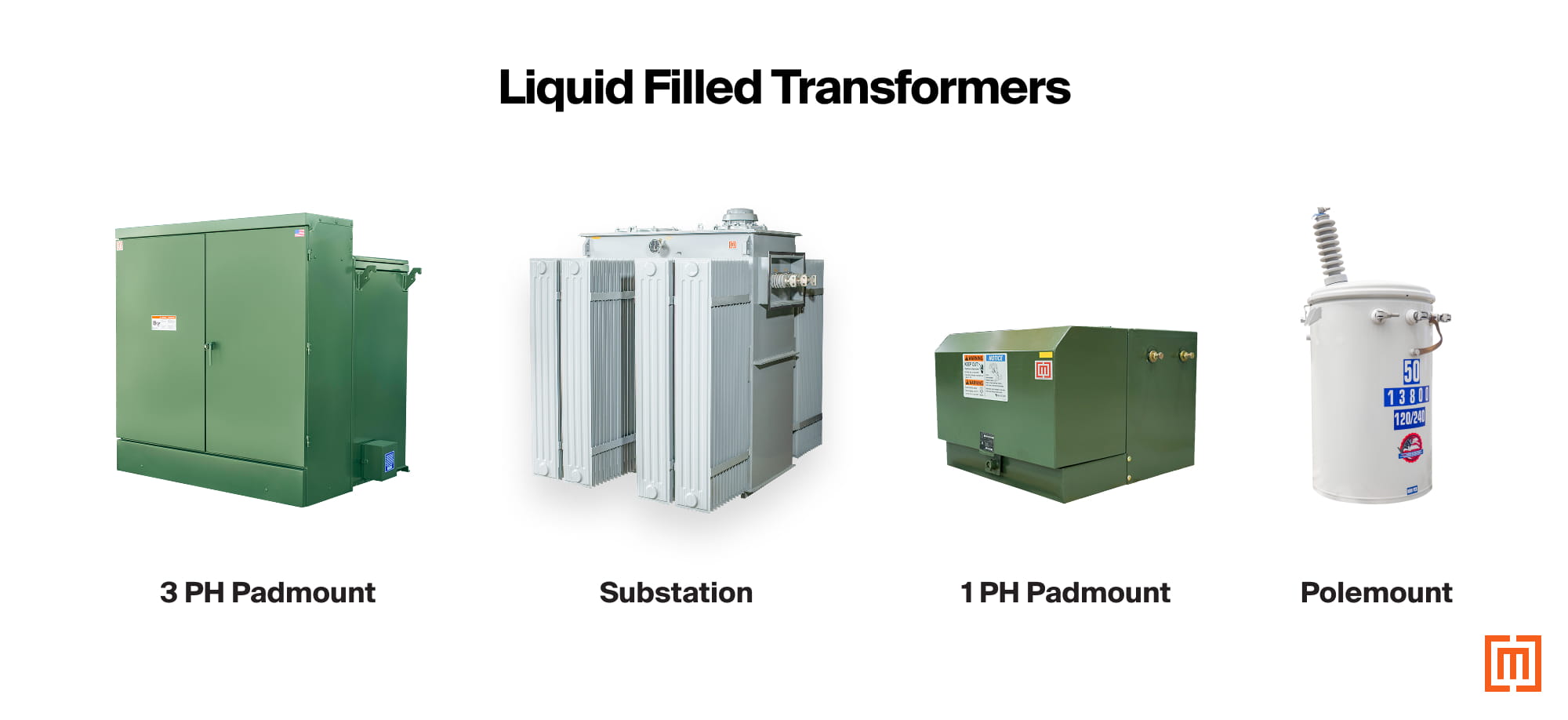
The most common types of liquid-filled transformers are padmounts, substations, and polemounts.
What are dry-type transformers?
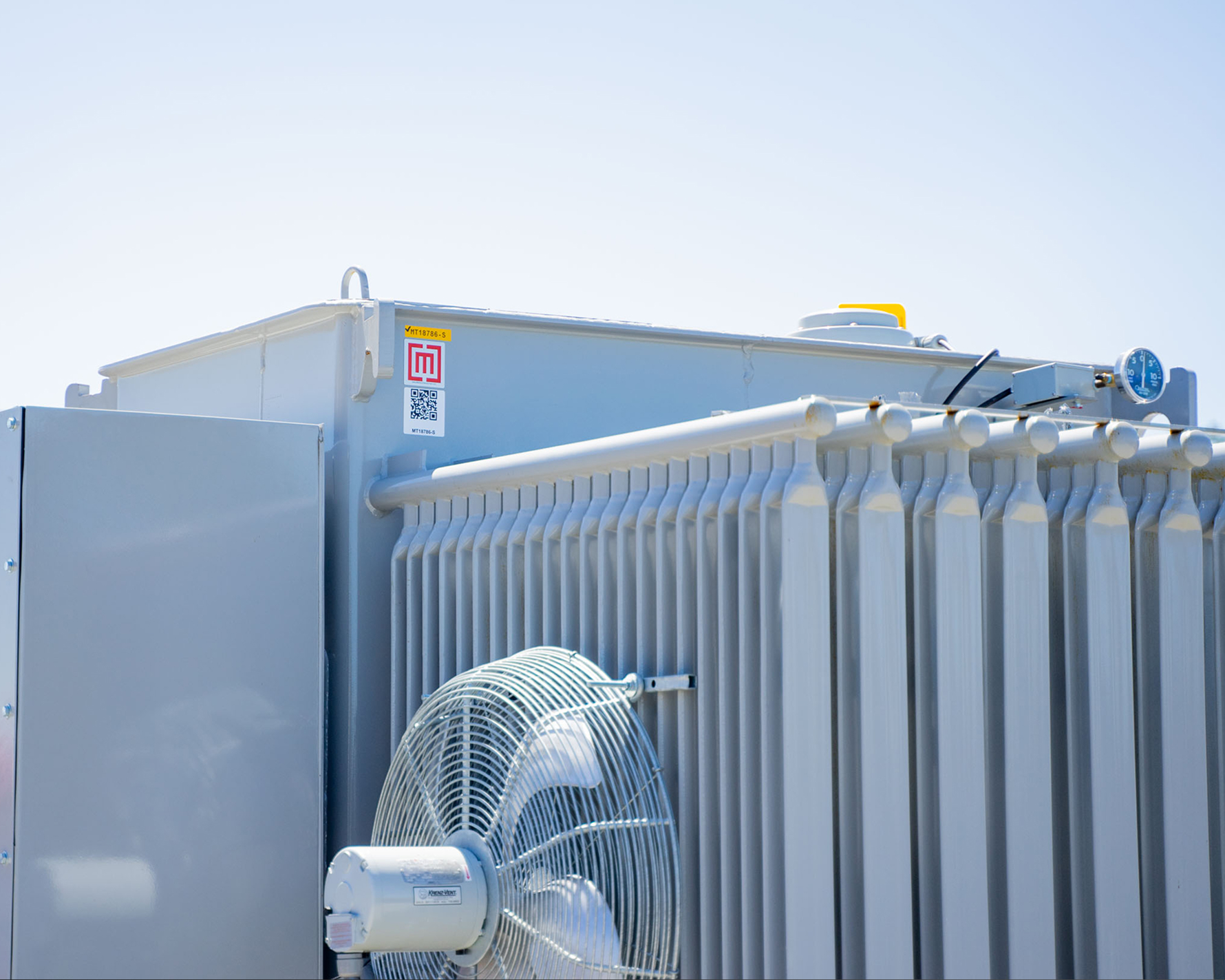
Dry-types also cool by natural convection with ambient air surrounding the windings. These transformers are also called “Air-cooled” or “Ventilated transformers.” Their enclosures have vents that keep air flowing over the core and coils. Hot air rises away from the core and coils, as ambient air is brought in. Because air is a less effective cooling medium than oil, dry-types run at higher average winding temperatures under normal load. In addition to vents, medium-voltage units use fans for extra airflow.
Instead of oil, dry-types use solid insulation, like aramid paper or cast resin, to protect the internal conductors.
Lastly, dry-types avoid the fire safety issues that can come with transformer oils. This makes them the industry standard for indoor commercial and industrial applications.
Types of Dry-Types
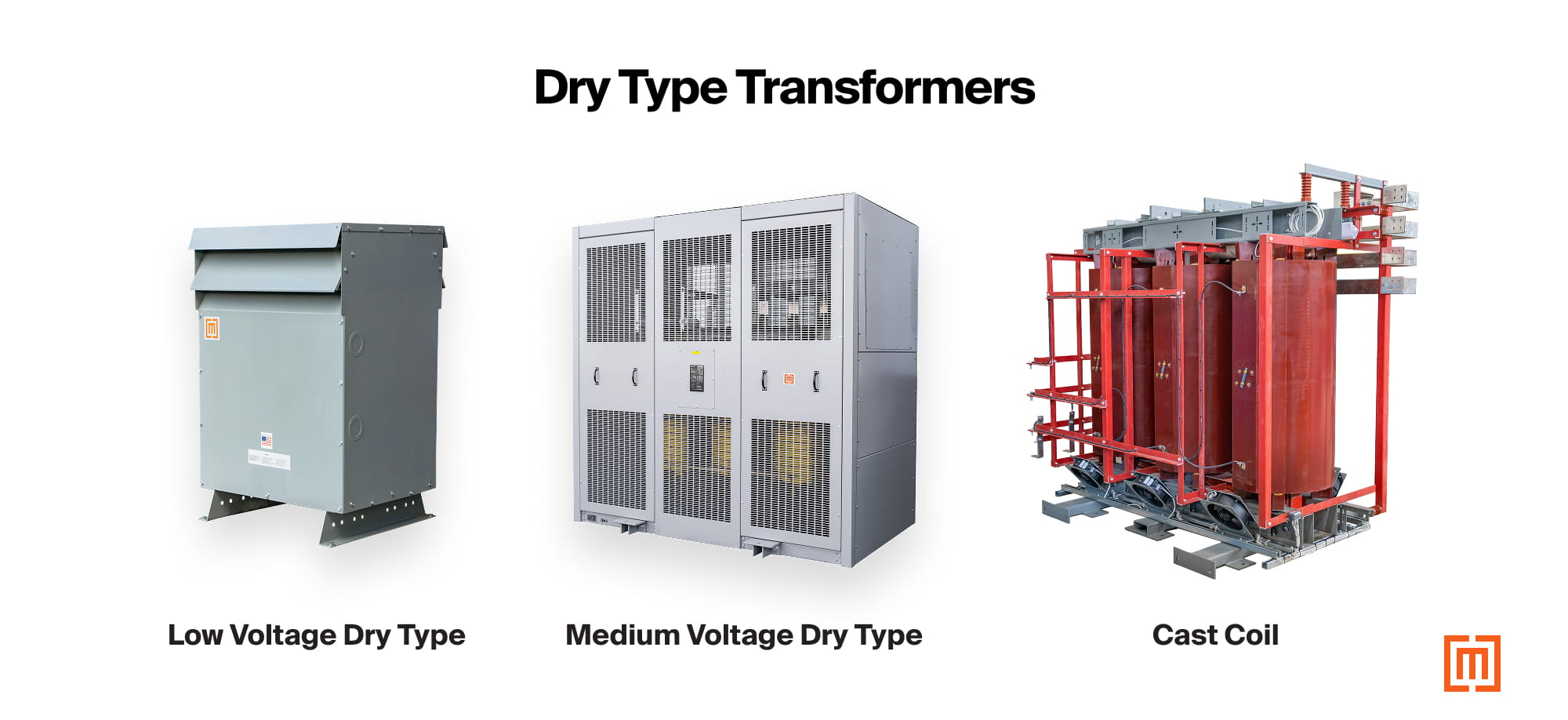
Dry-types fall into two main categories: low voltage (under 1,000 volts) and medium voltage (over 1,000 volts, also called dry-type substations). Cast-resin units, both encapsulated and cast coil, are another type that can appear in either voltage category.
Liquid Filled and Dry-Type Transformer Comparison
Let’s compare liquid-filled and dry-type transformers across seven factors. This should give you an idea of which type is best for your project. Below is a quick comparison table before we go into depth on each factor.
Environment and Location
Dry-types are the standard for indoor installations. Since they don’t use flammable fluids, fire code requirements are minimal. They're also easier to move indoors. You can even remove the core and coil from the enclosure to fit the unit through tight doors or hallways.
Installing a liquid-filled transformer indoors is possible, but it comes with extra steps. You’ll need additional infrastructure in case of a fire. Using FR3® fluid instead of mineral oil reduces some of those restrictions, but not all. Liquid-filled units are also heavier. So if you’re putting a unit on a rooftop, plan for the extra weight.
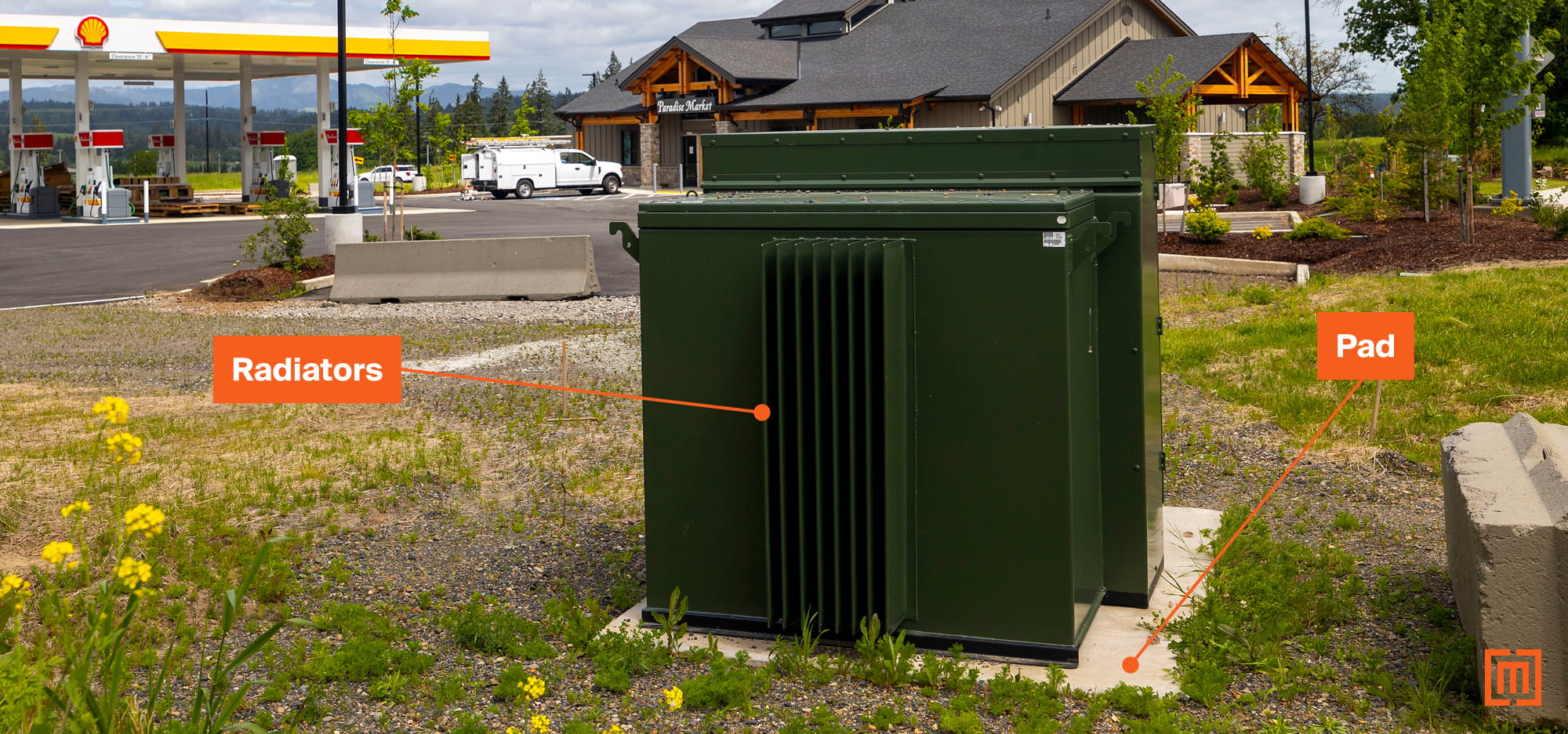
Liquid-filled units are designed for outdoor installations. They’re sealed and rugged. Their tanks protect internal components from elements like weather, moisture, and animals. Liquid-filled transformers, especially padmounts, also give extra protection against any tampering making them ideal for public places. Dry-types on the other hand are far more vulnerable to weather and environment hazards due to their ventilated design. You can build an outdoor rated dry-type enclosure, but they are usually installed inside.
Footprint
Liquid-filled transformers are typically more compact than dry-types at the same kVA rating and voltage class. Oil provides superior dielectric strength and cooling compared to air. This allows for smaller electrical clearances between live parts and more efficient winding designs. This adds up to a smaller overall footprint for a liquid-filled compared to a dry-type. Always leave the required space around both types of transformers for radiators and air flow wherever they are installed.
Noise Level
Liquid-filled transformers are quieter than dry-types. The oil inside the sealed tank dampens the sound of vibration from the core and coil. Since dry-types use open vents to circulate air, you’ll hear a lot more of the unit’s hum.
To put numbers on it: a 500 kVA liquid-filled transformer rates at 56 decibels per NEMA standards. A 500 kVA dry-type rates at 60 decibels per IEEE. Not a huge difference, but noticeable especially in occupied buildings or public places.
Cable Connections
Cable connections on dry-types are relatively simple and straightforward. The primary and secondary conductors are connected to transformer terminals with compression lugs.
Liquid-filled transformers like padmounts, can have more bushing options. They can use live-front or dead-front bushings, and each type has specific requirements for connections and tools. Read our article about padmount bushings to learn more about this.
Live-front terminations are easy to inspect visually. But the exposed terminals carry real arc flash and electrocution risk. You must fully de-energize the cables before making or changing any live-front connections.
Dead-front bushings reduce those safety risks by fully enclosing the connection in thick rubber insulation. However, dead-front setups require special elbows, and the disconnection process depends on if you have load break or dead break elbows.
Cost
When you look at the costs for liquid-filled and dry-types, it helps to break it out into three groups: upfront costs, installation costs, and operating costs.
Upfront Costs
A dry-type transformer typically costs more to manufacture than a liquid-filled unit at the same kVA. That higher build cost shows up in the purchase price.
Installation Costs
The main driver of installation costs is the unit’s location. Dry-type installation costs are similar whether the unit is inside or outside. There may be an added cost for an outdoor rated enclosure, but the installation itself is largely the same. However, installing a liquid-filled unit inside will come with higher costs due to fire safety requirements and containment requirements.
Operating Costs
Both new built liquid-filled and dry-type transformers must meet DOE efficiency standards. But the requirements are slightly different for each type. Liquid-filled transformers are naturally more efficient than dry-types. Because dielectric fluid provides superior cooling to the coils than ambient air, liquid units are less prone to overheating and experience lower electrical losses. As a result, a liquid-filled transformer will typically give you lower operating costs over the lifespan of the unit. The cost savings may be minimal and depend on the transformer design and utility cost.
Maintenance
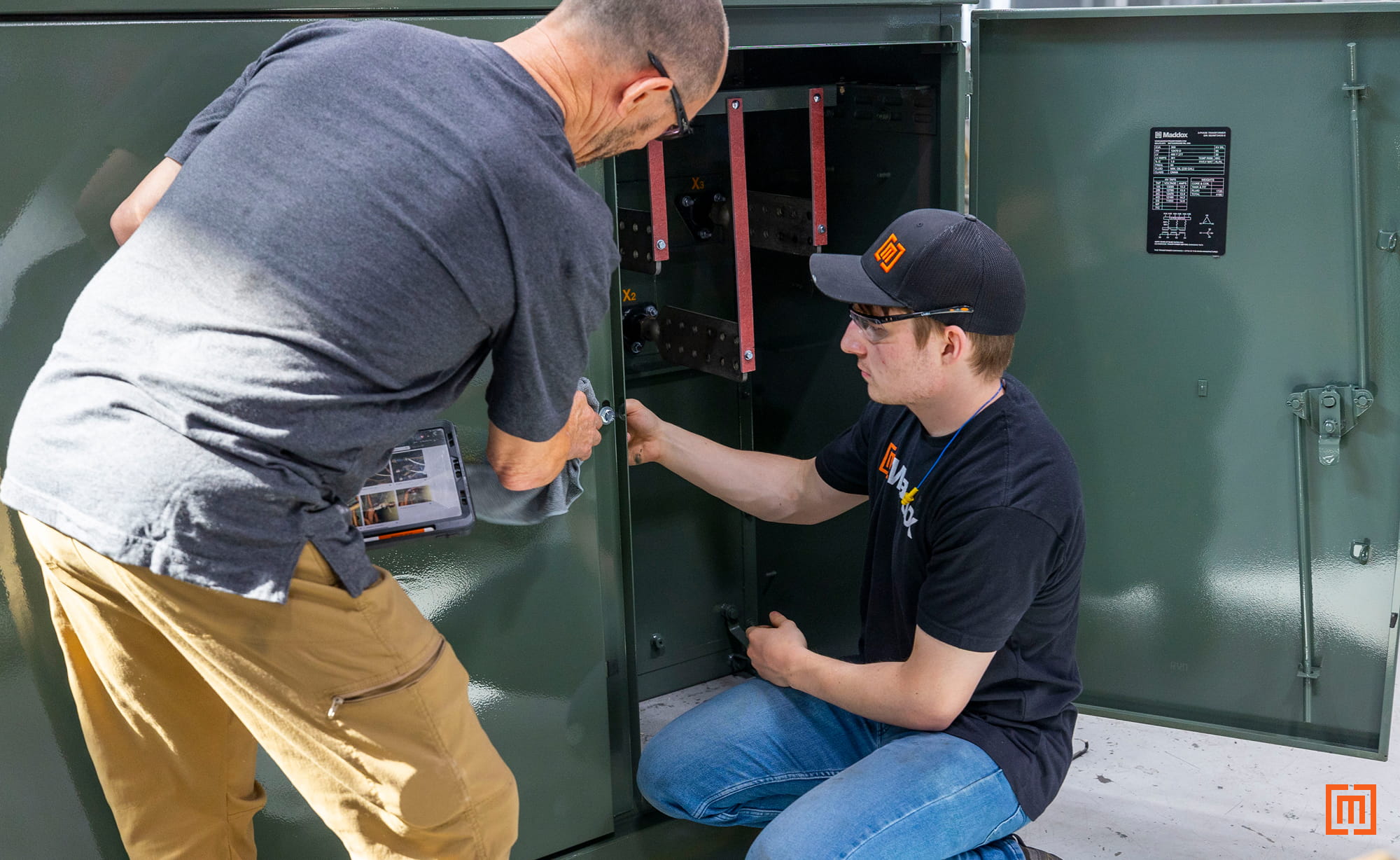
Routine maintenance for dry-type transformers doesn’t involve any insulating fluids to monitor or manage. The main job is cleaning the dry-type and keeping the vents open. The air vents on dry-types are more vulnerable to dust, moisture, and small animals. This means de-energizing the transformer to clean out the connections, enclosures and fans.
Maintenance on a liquid-filled transformer also requires periodic inspections. Because oil plays a key role in insulation and cooling, you need to frequently monitor and sample it. The oil sample tells you a lot about the health of the transformer. As long as your oil sample looks good, electrical tests will be minimal. You’ll also need to inspect the tank, bushings, and gaskets for any leaks and the temperature, pressure, and liquid level gauges.
Reliability
Both types are highly reliable when maintained and operated properly. Consistent maintenance matters more than which type you choose. A well-maintained dry-type and a well-maintained liquid-filled unit will both serve you for decades. The biggest factor in longevity is matching the right unit to its environment and application.
When to use a Liquid-Filled or Dry-Type Transformer?
For low-voltage projects at 600 volts and below, a dry-type transformer is the industry standard. These transformers are designed for low voltage conversion, usually indoors, though outdoor-rated enclosures are available. It is extremely impractical and rare to see a liquid filled low-voltage transformer.
On the flip side, it is also unlikely to see larger dry-type transformers above 5 MVA. Because dielectric fluid provides superior cooling and insulation compared to air, liquid-filled transformers are the industry standard for safely handling the heat and tighter internal clearances required for those larger kVA ranges. That is why you will see liquid-filled power class substations instead of dry-types.
For medium-voltage transformers in between those ranges consider the factors above. If the transformer will be installed outside, we usually recommend going with a liquid-filled option. They are specifically designed for this. If the transformer is outside in a public place, a padmount is usually the best option due to its tamper proof design. If the unit is going indoors, a dry-type is usually preferred because of the reduced fire code restrictions. These are general rules and you will see dry-type transformers installed outside with outdoor rated enclosures and you might see liquid filled padmounts or substations installed indoors.
Conclusion
At the end of the day, choosing between a liquid-filled and dry-type transformer comes down to where you’re installing it and what’s most important for your project.
At Maddox, we have thousands of both types of units in stock in yards across the country ready to ship to you! Fill out the form below to get yours today.


.webp)


